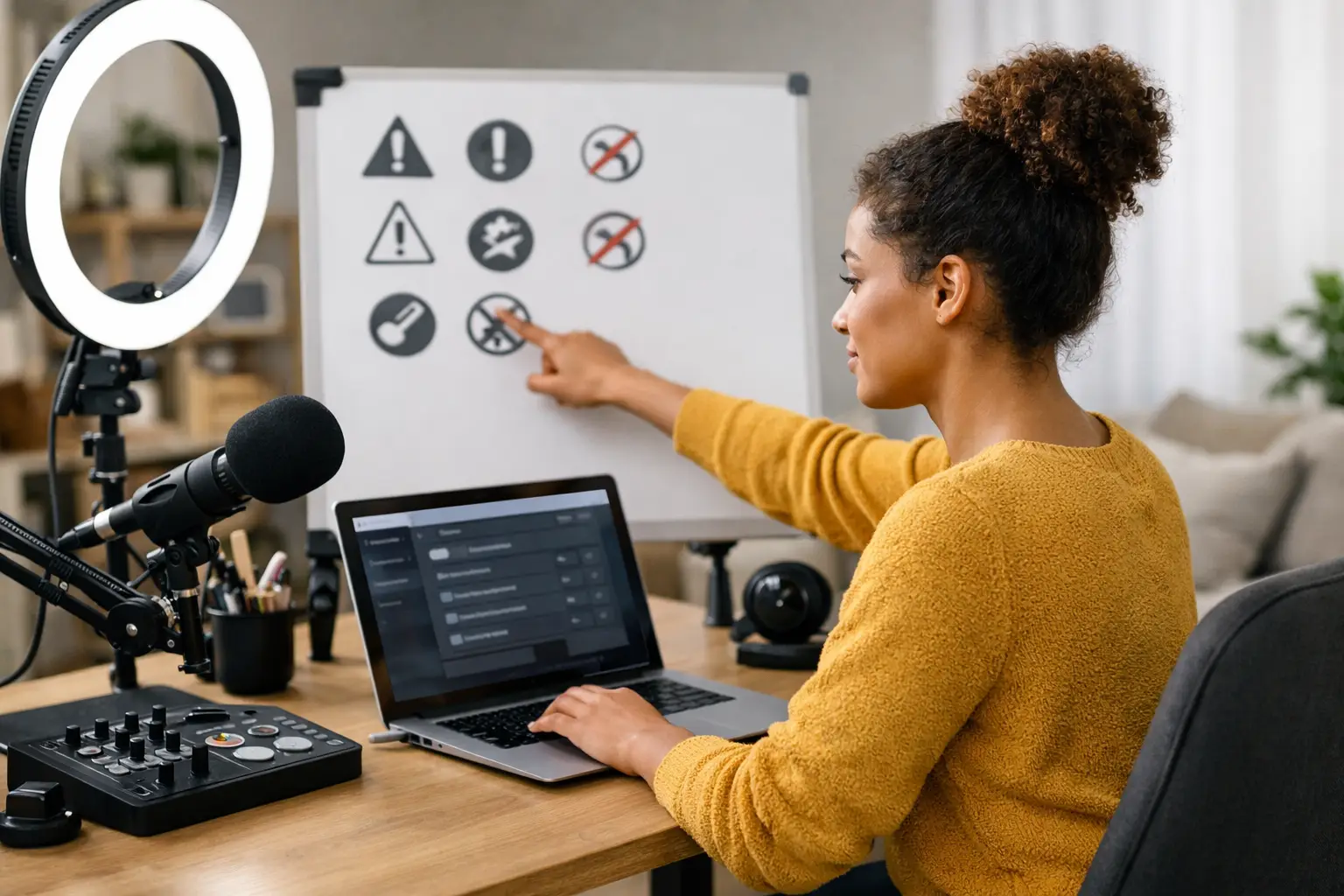
The fastest way to feel overwhelmed in camming is to start without rules. If you are figuring out how to set camming boundaries, the key is not being cold, difficult or bad at sales. It is knowing what you will and will not offer before a viewer, a regular or a big spender tries to decide for you.
That matters because camming rewards confidence. Viewers respond to models who feel clear, calm and in control. Boundaries are not the thing that holds your income back. In most cases, they are what stop burnout, protect your privacy and make your room feel more professional – which is exactly what helps you stay consistent and earn.
Why boundaries matter more than beginners expect
A lot of new models think boundaries are only about safety. Safety is a big part of it, but it is not the full picture. Good boundaries also protect your time, your mood, your body image and your long-term earning power.
If you say yes to everything in the first week, you may get quick attention, but you also teach your audience that your limits can be pushed. That is hard to undo. On the other hand, if you set clear expectations from day one, you attract viewers who respect your room and are more likely to become reliable spenders instead of constant boundary-testers.
There is a trade-off here. Very strict rules can make your room feel rigid if you communicate them badly. Very loose rules can make you feel stressed and resentful. The sweet spot is a setup that protects you while still leaving room for personality, flirtation and paid experiences that genuinely suit you.
How to set camming boundaries before you go live
The best boundaries are decided offline, when you are calm and not under pressure. If you wait until a customer asks for something uncomfortable, you are far more likely to hesitate, people-please or second-guess yourself.
Start with three areas: content, privacy and access. Content boundaries cover what you do on camera and what you never do. Privacy boundaries cover your real name, location, social media, family details and anything else that identifies you offline. Access boundaries cover messaging, customs, off-platform contact, scheduling and how available you want to be outside live shows.
Be brutally honest with yourself. Do not build your rules around what you think top earners do. Build them around what you can do repeatedly without feeling anxious, exposed or drained. A boundary only works if you can maintain it on tired days, not just confident ones.
It helps to write your limits down in plain language. You do not need a dramatic manifesto. You just need clear decisions. For example, you might decide that you do not show your face fully, you do not discuss your real-life relationships, you do not accept demands in free chat, and you do not move conversations off-platform. Those are strong business decisions, not apologies.
The boundaries that protect income as well as comfort
Some limits are obvious, like refusing anything illegal, unsafe or non-consensual. Others are less obvious but just as important if you want to keep earning on your terms.
Pricing is one of them. If you constantly bend your rates because someone says they will tip more later, you train customers to negotiate everything. Clear pricing is a boundary. So is deciding how long you stay online, how much emotional labour you give in free chat and whether you offer extras like custom content.
Time is another major one. Plenty of beginners lose energy by staying online far too long, hoping the room will suddenly take off. Sometimes an extra half hour is worth it. Sometimes it just leaves you exhausted and less consistent the next day. A time boundary protects your stamina, and stamina is part of your income strategy.
Emotional boundaries matter too. Some viewers want a fantasy. Some want a connection. Some will try to blur the line between the two. That does not mean you cannot be warm, sexy or engaging. It means you choose how personal you get. You are allowed to create an experience without giving strangers unlimited access to your real emotions.
How to communicate camming boundaries without killing the mood
This is where many new models worry. They assume boundaries will sound awkward or pushy. Usually, the problem is not the boundary itself. It is the delivery.
The strongest approach is simple, calm and matter-of-fact. You do not need a long explanation. You do not need to debate. You do not need to sound guilty. A short, confident response works better than a defensive one because it signals that your rules are normal and non-negotiable.
For example, if someone asks for something outside your limits, you can redirect instead of spiralling into a discussion. Tell them what you do offer. That keeps the interaction moving and keeps you in control of the sale. Boundaries are easier for customers to accept when they come with a clear alternative.
Tone matters. You can be playful, firm, sweet or blunt depending on your brand and room style, but the message should stay consistent. If you say no softly one day and give in the next, viewers learn that persistence works. If your answer is steady every time, most people adjust quickly.
It also helps to build your rules into your room culture. Put obvious limits in your profile, menus and chat expectations where relevant. That way, your boundaries are not appearing out of nowhere in the middle of a request. They are part of how your room runs.
What to do when viewers test your limits
They will. Some will do it out of curiosity. Some will do it because they test every model. Some will do it because they think money should override consent. Your job is not to win them over at any cost.
When a viewer pushes, the first rule is not to over-explain. A long explanation often invites negotiation. A short refusal followed by a redirect is usually stronger. If they keep pushing, mute, block or remove them based on the platform tools available to you.
That can feel scary at first, especially if you are worried about losing money. But someone who repeatedly ignores your limits is rarely a good long-term customer. They drain your focus, affect the mood in your room and can make respectful viewers uncomfortable too. Protecting your space is not bad for business. It is part of running your room like a business.
There is also a mindset shift worth making here. Not every paying viewer is your viewer. The goal is not to please everyone. The goal is to build a style of camming that you can sustain and profit from.
Review your boundaries as your camming career grows
Learning how to set camming boundaries is not a one-off task. Your limits may change with experience, confidence, platform choice and goals. Something that felt fine at first may start to feel draining. Something you thought you would never offer might later feel comfortable if the price, format and conditions are right. Both are valid.
What matters is that the decision stays yours.
Review your setup regularly. Ask yourself which requests leave you feeling good, which ones leave you flat, and where you are leaking time or energy for too little return. The best boundaries are not just about saying no. They are about creating a work model that feels profitable, sustainable and genuinely yours.
If you are serious about camming as a real income stream, treat boundaries like part of your professional toolkit. They sit alongside pricing, scheduling, branding and audience building. They are not a side issue. They are one of the reasons some models stay confident, independent and in control while others burn out early.
You do not need to start perfectly. You just need to start clearly. Set your rules, back them up and let your room learn how to treat you. The right audience will not be put off by that – they will trust it.
About the Author